Pages

Wednesday, July 16, 2014

Old Providencia


Five Things I Loved About Old Providencia


A haven after three days on constant motoring and a head wind bash, ¾ fuel supplies used, and other than a pleasant stop at Villovero, just an uncomfortable trip

Friendly folk - Columbian territory, a mixture of black Caribes, nothing's a problem, mon, nice cruiser folk too. A tropical paradise unspoilt by tourism, and the people are proud of their island

Reggae bars on idyllic beaches with funky outdoor furniture, hammocks, and just well, chilled out!

Scooter touring round the island discovering great road end views, laid back cafes, fantastic seafood, wonderful swimming

Santa Catalina Island, Morgans Head walk and great snorkelling

Oh, there was one thing I didn't like – having to do more work on my generator!


Boga's Cay, Vivorillo - an old cement works on a tiny coral islet


Old Providencia

The much castigated Generator


Providencia Local

Great snorkelling just off the beach

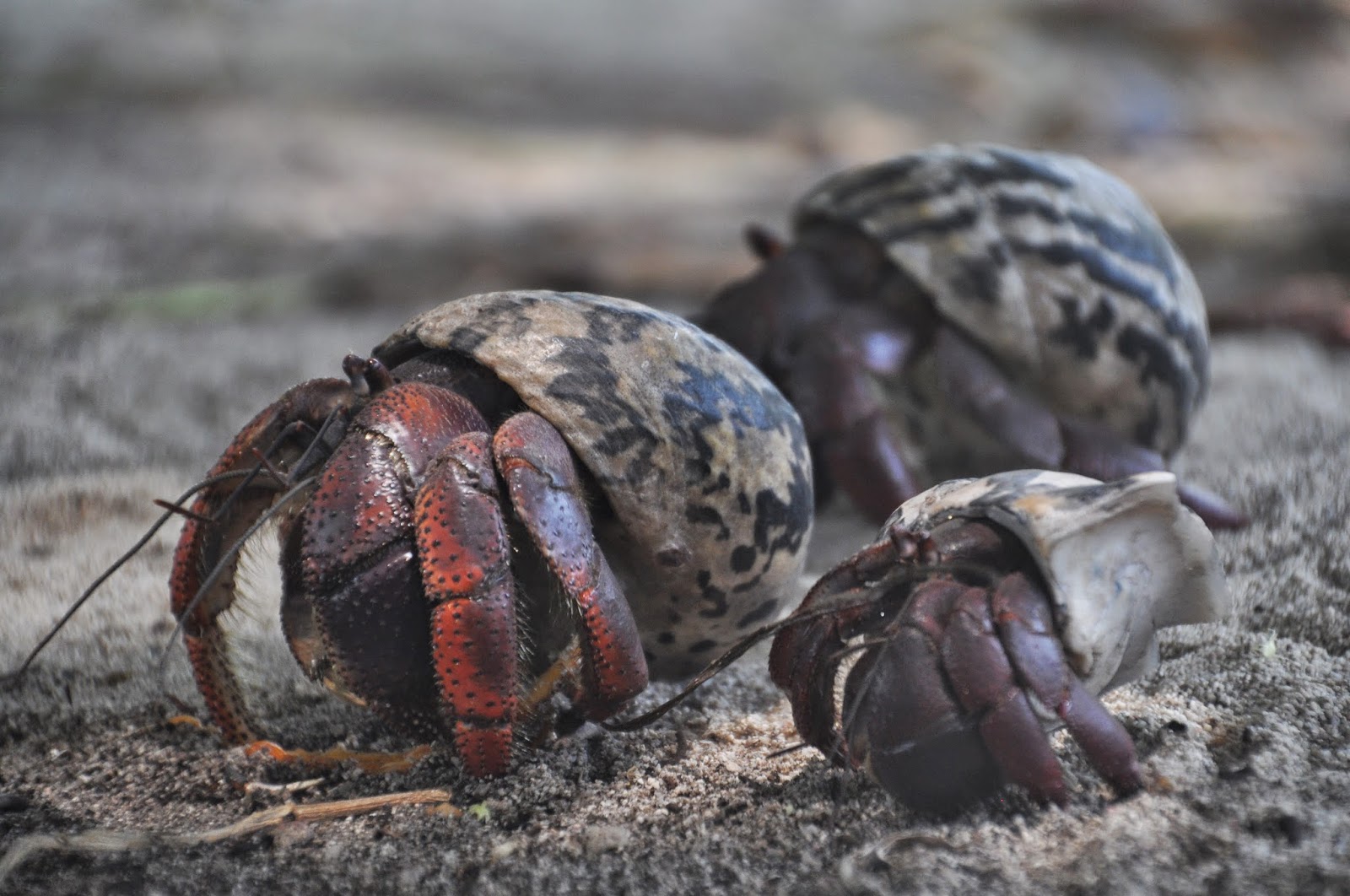
Another excuse to stop and take photos. Just back up the road was another large statue featuring land crabs - they migrate May/June but sadly we didn't witness any great crab marches


Another little bar at the end of a steep walkway, the proprieter a happy young Columbian living upstairs above the "bar", promising us a great night around a beach fire with his guitar, with fresh lobster and cold beers

Bob Marley LIVES 

Cannons at the old fort on Santa Catalina provide perfect homes for the locals

A pic taken from the fort near Morgan's Head - the locals call the hill with the notch "Morgan's Arse"
- a classic navigation feature entering Santa Catalina Harbour

At Roland Roots

Soem dangerous concoction by the Rasta barman, best enjoyed sitting in an old boat with Columbina colours, looking out on cool aquamarine waters

Colourful walkways everywhere

More seafood than you can eat at a fantastic restaurant right on the beach,
and so so cheap!

Someone from Aotearoa has been here before me

Its hard work,all this snorkelling, walking, scootering and reggae bars!


At Morgan's Head, brain coral, anemones and algal forests
(see Video)

Sunday, July 13, 2014

Bay Islands of Honduras

Many many lifetimes ago I read a glossy tourist magazine in a waiting room about 'The Bay Islands', and I determined to go there one day.
That time came only two months ago, and as in my earlier day-dream I was sailing my own boat, free to explore as I chose. But it was much easier and more rewarding than the reality.
Leaving the idyllic Rio Dulce of Guatemala and full of anticipation we set sail for the Bay Islands, a two day sail close to the wind but a good forecast.
After 12 hours and dawn just breaking we were a third of the way there when I felt the boat was very sluggish. I went below to find salt water just pushing above the cabin sole, yet no bilge alarm or pumps running. The main pump had obviously failed, and the emergency pump would only work on manual when it usually kicks in automatically. The Henderson hand pump came to the rescue and after a couple of hours of frantic work we had things under control -but where was the water getting in??
If the pumps failed now I knew we wouldn't make it to Roatan so I turned Whakaari for the mainland of Honduras. The closest port with facilities appeared to be Puerto Cortez, so that was our new destination. As soon as we were within VHF range I hailed the Port Captain and requested emergency assistance. The response was immediate and professional, and in no time we were being escorted to the anchorage, emergency bilge pumps on standby, and a direct line to the Naval Base who had a travel lift to get us out of the water.
By this time Jackie, my crew, and I had had enough of manual pumping and stressing about water levels in the bilge. After a 2 hour wait for the travel lift to be free, we earned envious looks from another yacht that had been anchored off the naval base for a week wanting to be hauled.
I was certain the leak must be a gradual worsening of impacts to the hull from my run-in with a coral head back in Mexico many weeks before.
So began our Honduras experience, on the hard at a naval base in Puerto Cortez, going over every inch of the hull, stern gland, sea cocks etc trying to work out why the bilges had filled, and why the pumps hadn't activated. In brief, it turned out the emergency pump had no vented loop or non return valve and so had set up a self syphoning action that pulled more water back into the boat than it pushed out, then the wiring failed as it became saturated, due to corroded joints. The main pump had blown both it's valve sets, the relays in the bilge for both pumps had failed, and there was a fault in the fuse holder for the main pump up at the switch board – all good stuff to find out in relatively safe inshore conditions, and the point of having a shake-down cruise.
We took a cheap room at a nearby hotel, and spent the three days on the travel lift doing a quick bottom job – fibreglass repairs to the coral head impact area, a layer of epoxy paint to the lower keel, and more bottom paint – Jackie seemed to delight in getting old antifouling paint all over her, when she wasn't ogling at the many virile young Navy men taking their morning swims by the boat or working out nearby.
Back in the water ( in typical rush rush Navy style) we set sail for the Bay Islands once more, having picked up a back up bilge pump and float switch, and sorted a make shift arrangement for the pumps until a full service kit arrived with Annika.
The wind died almost immediately and we were left with no choice but to motor sail through an uncomfortable swell. BUT – the engine refused to turn over. Starter Motor! No problem, I've got a brand new one in the spares locker. Pulling it out of it's unopened packaging my heart stopped – completely the wrong unit, too big, too many teeth on the sprocket, etc etc.
So there was no choice but to overhaul the existing starter motor right there in the cockpit, tossing around on the sea. Once re-installed the engine fired up and has been ever since – tho I was holding my breath during the Panama Canal transit recently – that would be a costly disaster, to have engine problems and cause a big delay!
This latest event just added to my concerns about heading out into the Caribbean Sea with unresolved boat issues, so I decided to stay close in and head for a bay that a cruiser also on the hard back at Cortez had recommended – Escondido. He is a film maker and seems to have found some wonderful places in Honduras, and we were happy to take his advice.
The slow progress meant we made our approach into this tight deserted bay well after dark, and with no moon, minimal details on the chart, and only a hand drawn sketch from the film maker, I was totally reliant on radar and depth sounder.
All worked out fine and in the early dawn, woken by the deafening calls of Howler Monkeys, I could see we were safely positioned in this beautiful pocket bay.
Our morning here was a delight, going ashore to wander amongst palms and look out along the rugged coastline, seeing the fishermen come and go in their cayucos, and hearing the intense birdsong in such a natural harbour. It was only when we left that we read in the cruisers guide that this bay was not recommended to yachties as two boats were recently attacked here with fatalities resulting!


The next day we arrived in Utila, the first of the three main Bay Islands, anchoring in South East Bay and dinghying in to explore the village.
Looking back, this was the nicest of all the Bay Islands. The place is colourful, with a happy feel, and everyone is very relaxed & friendly. It's a backpackers haunt, popular for diving courses, so the visitor crowd is very young and lively. Oh, and the Cinnamon Rolls are 'to die for'. There are lots of bars and cafes along the waterfront where you just dinghy over from the yacht and step up to your table.


On to Roatan, over some shallow coral areas, past isolated shacks on rocky outcrops, we ended up anchoring in a small hole of a bay to weather a blow, right at the end of the airport runway. Its only redeeming feature was the friendly crowd of kids who swam out and spent some time with us chatting and diving off the stern ladder.
The next day we rented a taxi to look around for somewhere interesting to sail and anchor -it was all a big disappointment. The coast is a mess of fading industry or failed developments, or its crammed with squid fishing fleets and mooring facilities for cruise ships, with roads coming to a dead end at the patrolled gates of another exclusive resort.


I did manage to find where I could get some help from tradesmen, so we moved Whakaari from Coxen Hole to Dixon Cove where they service the fishing fleet and the cruise ships dock.


Add caption


Chong, a Nicaraguan, and a black Caribe just the spitting image of Cuba Gooding Jnr dealt with tricky electrics – the float switch repairs to finally (I thought) resolve my bilge pump issues, and my temperamental SSB – turned out the microphone element had gone, which Cuba fixed pronto.
Jackie, despite her undiagnosed back injury, got into the R&M as well.

After the unpleasantness of anchoring amidst fishing boats, ferries and cruise ships we decided we needed a special treat so we found Barefoot Cay resort, and indulged Whakaari with her own private dock, and for us a poolside restaurant and beachfront cabin, complete with hammocks.


Jackie left from there, back to a snow warning in Aspen, and I moved to the quiet  (cheaper) location of Old Roatan Yacht Club, a place once teeming with cruisers, but I found they'd been forced out by rising prices and uninterested management. The anchorage is now dominated by fishing fleets, and the water is filthy due to the overcrowded shanties perched on the waters edge with no sanitation.
It is unbelievably hot and humid here, just breathing brings on a sweat. The air is thick with smoke haze, and the wind is toasty warm when it blows. The temps never seem to go above 35 but it seems twice as hot with the mugginess. Running the aircon is essential to get rid of all the moisture so I had Whakaari on shore power snug in a slip with the Aircon full on – I was never impressed at having to leave her cool interior to get wifi and attend to the never-ending list of jobs.


Annika arrived via Mexico and mainland Honduras having had the third degree from Customs en route as to why she only had a one way ticket. She brought lots of treasures in the form of a bilge pump overhaul kit, generator spares and a Central Americas chip for my chartplotter and a new plug-in for my GPS.
With two paddleboards we were able to explore the Fantasy Island area where all the cruisers seem to hang out, and we did a little snorkelling, but really Roatan seemed to offer very little... It didn't help that the trade winds were blustery and water visibility was poor, but we couldn't understand the attraction or why some of the cruisers we'd met had stayed so long. The best memory I have is snorkelling with many large crayfish (lobster to the locals)all walking about or fighting one another in a protected marine reserve.

So soon we sailed to Guanaha, the last of the Bay Islands, looking for more interesting territory. There was a long period of strong tradewinds forecast, which would make our progress towards Panama very slow, so we would have to make a decision to leave straight away, or end up spending a full week in Guanaha. A quick recce by dinghy and paddleboard showed we could do the best stuff in a day or two then make sail for Providencia and on to Panama, rather than try to fill in a whole week here. The one thing I'm sad we missed out on was a music night put on by fellow cruisers at the german Manatee Cafe.

Guanaha's special treats were the Venice-like Bonacca Cay where most of the population crowds onto one tiny island with no streets and some cute little canals, and the cut across the island that you can motor through and see some clean water, a stunning lighthouse, and Columbus' landing place on the north coast.
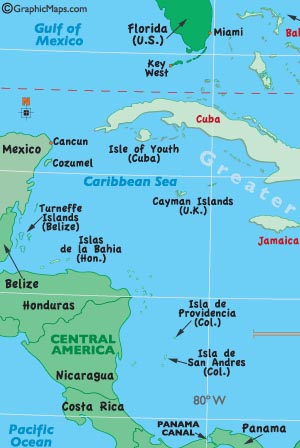
Eventually clearing out from Bonacca Cay (me waiting for the Port Captain to return from a 2 hour lunch and Annika fending off the attentions of many local men at the wharf) we headed out into a rough sea and head winds to round the treacherous Nicaragua Bank via Vivarillo and Providentia (Columbian territory!) then down to northern Panama to cruise the Boca del Toros region.
A number of yachts were leaving at the same time so we expected have some company, though we only saw one other boat. Annika's concern was the unwanted company of locals from Bonacca who now knew too much about where we were headed, just two of us in a valuable yacht, with lots of isolated terrotory ahead of us. The Bay Islands celebrate their history of pirates and buccaneers (Henry Morgan, to be sure, aye), though I'm not sure that pirates are still active. Still, it does fire the imagination!

I recalled another cruiser back at Cortez saying as we left - “now's the time to stop being nice, there are some desperate characters out there”.

Sunday, July 6, 2014

Sweet River! - The Rio Dulce, Guatemala


Livingston is our entry point for Guatemala, a laid back Reggae filled cluster of ugly buildings, and perched on the Rio Dulce riverbank with no road access. After ploughing a new channel for Whakaari over the notorious bar then fighting to anchor in the raging current that rushes past the docks, we dinked in to be welcomed by a totally ripped dreadlocked rasta man who would mind the dinghy, run errands, and point us in the right direction for the Customs Officer, all for a few quetzals.
The welcoming attitude continued and we enjoyed Gautemalan food and beers during our brief wait for the port agent to do our clearance in - running around that the cruiser normally does, and takes all day.
Before dusk we were underway, huge blocks of ice aboard courtesy of the “Rasta Hulk” as my fridge had again died, and motoring in awe into the Rio Dulce gorge.
The cliffs continued to loom higher above us, and as the sun set the limestone cliffs began to glow, the birdsong swelled, and I was feeling compelled to find the first shallow bank to anchor for the night, not wanting to pass through such stunning scenery too fast.


In a few moments we entered the Rio Dulce. On each side, rising perpendicular from three to four
hundred feet, was a living wall of green. Trees grew from the waters edge, long tendrils descended to the water, as if to drink and carry life to the trunks that bore them. It was, as the name imparts, a Rio Dulce {sweet water}, a fairy scene of Titan land, combining exquisite beauty with colossal grandeur.
As we advanced the passage turned, and in a few minutes we lost sight of the sea, and were enclosed on all sides by a forest wall; but the river, although showing us no passage, still invited us onward.
John Lloyd Stephens, 1841


Traffic on the river seemed to increase with sundown, tours returning from upriver, families heading home in their dugout cayucos, water taxis buzzing past like bees, and the occasional luxury launch busting ignorantly through creating huge wakes to threaten all others.
Later that night when all was quiet I watched, or was watched by, bright globes moving among the ferns and vines along the riverbank, and fireflys floating around them.


With the first rays of light reaching down into the gorge, Howler monkeys thrust out their haunting territorial calls, carrion birds soared the cliffs overhead and soon the river was alive again with boats of every description.

The days that followed on the river and the lakes inland were magical, and we soaked up the sights and sounds of a refreshing new world. 
Fresh water replaced the constant clinging salt, smooth water for paddleboarding made for sublime exploration of the bays and stream inlets, drifting by birdnests and over schools of fish, marvelling at the thatched waterline level homes, indulging in the most delicious fruit and vegetables available everywhere for a few cents.
I found an expat US couple (who, like many cruisers, ran up the Rio Dulce for hurricane season, and decided to stay, or at least return season by season) providing boat services and had my refrigeration and propane sensor issues fixed. I was approached by an astute young canvas worker who saw my Bimini needed work, and did an extensive repair and strengthening over two days for $28. I'm thinking I'll send it to him again from the Pacific side and have a new Bimini cover made.


There are two lakes which feed the Rio Dulce, Golfette and Lago Izabal. They're essentially one, divided by a narrowing where the Spanish built an impressive fort to control marauding pirates after their looted Mayan and Incan gold treasure, cacao and indigo. Castillo San Felipe, built in 1652 is beautifully preserved, now featuring grassy meadows, hibiscus trees and picnic tables. You gain entry by crossing a drawbridge over the moat, to see bronze cannons and the chain mechanism used to block the narrow channel.
From Fronteras on Rio Dulce its a 5 hour drive to the north to Tikal, one of Central America's classic Mayan sites. But that's another story - See my separate blog on this trip.

We sailed across Lago Izabal to access Rio Agua Caliente, which is of course a small river with a thermal spring, and makes for a very enjoyable hike into the foothills, a rewarding soak in a natural steaming pool under a hot waterfall, and colourful scenes of villagers washing and bathing.

I boulder hopped upstream for half an hour and then swam into a cave following the river's source into a crevice some 75 meters in to where an underground waterfall tumbled out of the rock in absolute darkness.
Returning across the lakes and down the Rio Dulce to the Caribbean again was just as enjoyable as the journey inland, soaking up the powerful landscapes and life on the river-children paddling their cayucas to & from school, boys casting their nets, traditional Mayan thatch-roof homes lining the banks... A sweet little cabin on the water with a “Se Viende” sale notice had me wondering -it would be so simple to stop a while and try living here.


Along the river are numerous side branches to explore, a Manatee Preserve, and more agua caliente (some commercialised, some natural).
Aktenamit is a grass roots development and outreach project with an excellent health care clinic, medicinal plant gardens, textile and paper-making courses, adult literacy programmes, and so on. 
Donations, supplies and manpower from cruisers are always welcome. Have a look at their website : aktenamit.org

Saturday, July 5, 2014

Belize It or Not

Some time ago now I found myself sneaking along inside the world's second largest barrier reef, in very shallow waters, looking for Ambergris Caye.

This small narrow island inside the reef is a popular tourist destination, with sailing charters, diving and snorkelling its main drawcards – from here you can dive the Belize Blue Hole, see cannons, manatee, sharks, and corals. Its the largest developed island in Belize, its main village of some 4,500 residents being San Pedro (after St Peter, the patron saint of Fishermen)
Ambergris is the name of a rare grayish waxy substance secreted by sperm whales and once highly soughtafter as a perfume base. Apparently it was once common for find ambergris washed up on the shore here.

My new crew, Jackie, had made herself comfortable at Xanadu resort and was enjoying a welcome respite from the Colorado winter. I busied myself in more “boat maintenance in exotic places” which my shakedown was teaching me to accept as Cruising in its truest sense.
The generator consumed more time & dollars, and when fixed (two new impellors reqd) I foolishly thought that would be the end of it for some time.

The winds and seas remained huge so while waiting for better conditions to head out to the cays around Belize with a rookie sailor we checked out the local sights, then decided to take a tour that went north to the Belize / Mexico border, a Mayan-made cut through mangroves to create a canoe trading route, and visited protected areas and snorkelling sites inside the reef.
All went well until our boat captain decided he could run a pass through the reef and take the faster route back south. He mis-timed his run and drove the the boat too fast
on into a huge cresting wave, bursting off the top and taking us airborne for some ten feet to pancake down hard. The boat was all steel, and everyone took really hard hits. I'd prepared myself for the impact but still felt my brain thud against my skull and my spine compress. Several people were lying on the deck crying in agony, a mother was irate with the crew for her sons' injuries, a young honeymooning couple just held each other recovering, Jackie was very quiet and obviously hurting.
We went on with the tour slowly and quietly, and by the time we were back at San Pedro people were displaying a lot of bruising, aches and pains. The company refunded all fees and we heard there was some action against the boat captain who had expressly been told the route outside the reef was not to be used in the current conditions.
The physio and massage services in San Pedro did well that week, and in hindsight Jackie should have made more use of them. As time went on her movements around the boat became slower and more painful, and she was constantly being critical of her physical ability. I was also making many changes to how and where we sailed, tasks I'd give her, and so on as I could see she was struggling and in danger of getting further injured. It wasn't until J had returned home and had an Xray that it became clear how serious her injuries were. Some three months later she is still receiving treatment for a lower spinal fracture, is wearing a custom made full torso fibreglass brace, and having to live with very limited movement. Time will tell how her spine responds to the treatment. I am still totally amazed she carried on to crew on the boat, complaining little when e.g opening the heavy chest fridge lids (which could only have aggravated her injury each time), and even spent two solid days cheerfully hiking around Tikal, in the Guatemalan highlands.

When the weather finally improved we set sail for the Tuneriffe and Half Moon Cays to the east, running the San Pedro Pass just after dark and sailing through the night in still brisk 20-25 knot winds and a ESE rolling swell. Our first anchorage was at South East Pass for breakfast but the swell was very uncomfortable, and the pass into shelter at Big Cay Bokel was still closed out by big seas. So we headed round the point into the swells again and crossed to Lighthouse Reef where all the dive charter boats anchor, and entered a massive lagoon with the clearest water I had seen since the Bahamas. We briefly explored the area and landed on deserted beaches, and after bludging some fuses from a dive boat for my cantankerous fridge compressor, went on to Half Moon Cay.

Wow, this is possibly the most beautiful cay in the region! To the sough is Half Moon Cay Natural Monument, featuring a huge White Morph Redfooted Booby and Frigate Bird colony and fantastic snorkelling, and to the north the famous Blue Hole Natural Monument. These are two of seven components of the Belize Barrier Reef Reserve World Heritage Site. Getting there is a breath-stopping traverse of shallow shoals and coral heads, using various wrecks on the skyline for bearings.

I had decided not to dive at the Blue Hole, or motor sail over it as many cruisers do - both seemed inadequate ways to add to the experience of simply seeing and appreciating its uniqueness. So we spent our time enjoying the intense activity at the bird colony, visiting at dawn, noon and dusk, and had the bonus of close encounters with land crabs, lizards, iguanas and Booby chicks.

After saturating ourselves in the beauty of the place, we picked our way out through numerous coral heads in crystal clear waters, and made the long run on an easy reach to Punta Gorda to clear out of Belize and make for the Rio Dulce. As in the Bahamas, and Cuba, I was in many ways sad to be sailing past such extensive and beautiful cruising grounds after only scratching the surface, and aware that many cruisers I had met were spending whole seasons exploring just one of the many regions I had sailed through in less than four months. As I sailed the grave yard shift down the outside of the
huge archipelego of reefs & cays all the way to Sapodilla, I peered at my chartplotter wondering if I would ever get the chance to explore any more of this fascinating watery world, most of it at threat from sea level rise.


Punta Gorda
Punta Gorda turned up in the early hours, and delightfully the skies were clear so we could take in the striking landscape – the Rio Grande emptying into the bay, Saddle Back and Gorda Hills some 620m high above the village. The people were easy going, village life in full swing with many markets along the dusty streets. My papers weren't quite in order due to a misunderstanding when leaving San Pedro but we were treated fairly and quickly, and soon able to leave, hopefully making the high water at Livingston where we would enter the Rio Dulce 16nm to the south.

Half Moon Caye

Rejected Booby Chick being raised by Park Staff

Land Crabs sweeping under picnic tables for scraps

White Morph Booby adult with chick

Iguana

Magnificent Frigate Birds

Part of Half Moon Caye Ntural Monument
Research Station


Looking for Manatee

Booby Colony -Dad home with some food

Booby Chick

Audubon Society Display at Half Moon Caye
The psychedelical turtle: A later pic after Jackie's spinal injury had been diagnosed
The tour boat driver with an urge to  fly?!
Whakaari and wreck off Half Moon Caye